


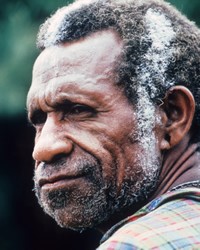

The Waffa Kami are an indigenous people group living in the Eastern Highlands and Morobe provinces of Papua New Guinea, particularly in areas near the headwaters of the Waffa River.
They belong to the broader New Guinea cultural region, one of the most linguistically and culturally diverse areas in the world. Their identity is closely tied to their language, Waffa, which connects them to neighboring groups while preserving a distinct heritage.
Like many groups in Papua New Guinea, their history has largely been preserved through oral tradition rather than written records. Over time, outside influences such as mission work and limited government contact have contributed to changes in community life, while many traditional patterns have continued.
The Waffa Kami live in small village communities, often in remote and mountainous terrain. Life is closely tied to the land, with families depending on gardening, small-scale agriculture, and local natural resources for daily needs.
Community life is centered around extended family relationships and clan structures. Cooperation, shared responsibilities, and respect for elders help maintain order and continuity within the group.
Homes are typically built from locally available materials, and daily routines reflect a practical knowledge of the environment. Travel between villages may involve walking long distances or using simple means of transport due to limited infrastructure.
Although some aspects of modern life have reached these communities, many still live in ways that reflect long-established traditions, balancing older customs with gradual change.
The Waffa Kami are identified primarily as Christian, and Christianity is widely present among them.
Church life plays an important role in many communities, shaping moral teaching, worship practices, and social life. However, as in many parts of Papua New Guinea, there may still be individuals who hold to beliefs involving spiritual forces or practices outside of biblical teaching. Where such beliefs exist, they reflect trust placed in powers other than the one true God revealed in Scripture. The message of the Bible calls all people to turn from these beliefs and place their faith fully in Jesus Christ alone for salvation.
Portions of scripture and the New Testament are available in the Waffa language, providing an important foundation for spiritual growth and understanding.
Although many Waffa Kami identify as Christian, there remains a need for deeper understanding of the gospel and for lives firmly grounded in biblical truth. Faith must move beyond identification to genuine trust in Christ and obedience to his word.
Access to the full Bible in their language remains incomplete, which can limit deeper study and teaching. Continued efforts in translation and distribution would strengthen both individuals and churches.
There is also a need for well-trained and faithful leaders who can teach Scripture clearly and guide their communities in spiritual maturity.
Because of their remote setting, encouragement, discipleship, and support for local believers are important so that the church can continue to grow in strength and clarity.
Pray that the Waffa Kami would grow in a clear and personal understanding of the gospel and trust in Jesus Christ alone for salvation.
Pray for the completion and effective use of scripture in their language so that God's word may shape daily life.
Pray for strong, biblically faithful leaders who will teach truth and shepherd their communities well.
Pray that any remaining trust in spiritual forces apart from Christ would be replaced with full confidence in him alone.
Pray that believers among the Waffa Kami would be equipped and motivated to share the gospel with neighboring peoples.
Scripture Prayers for the Waffa, Kami in Papua New Guinea.
| Profile Source: Joshua Project |


